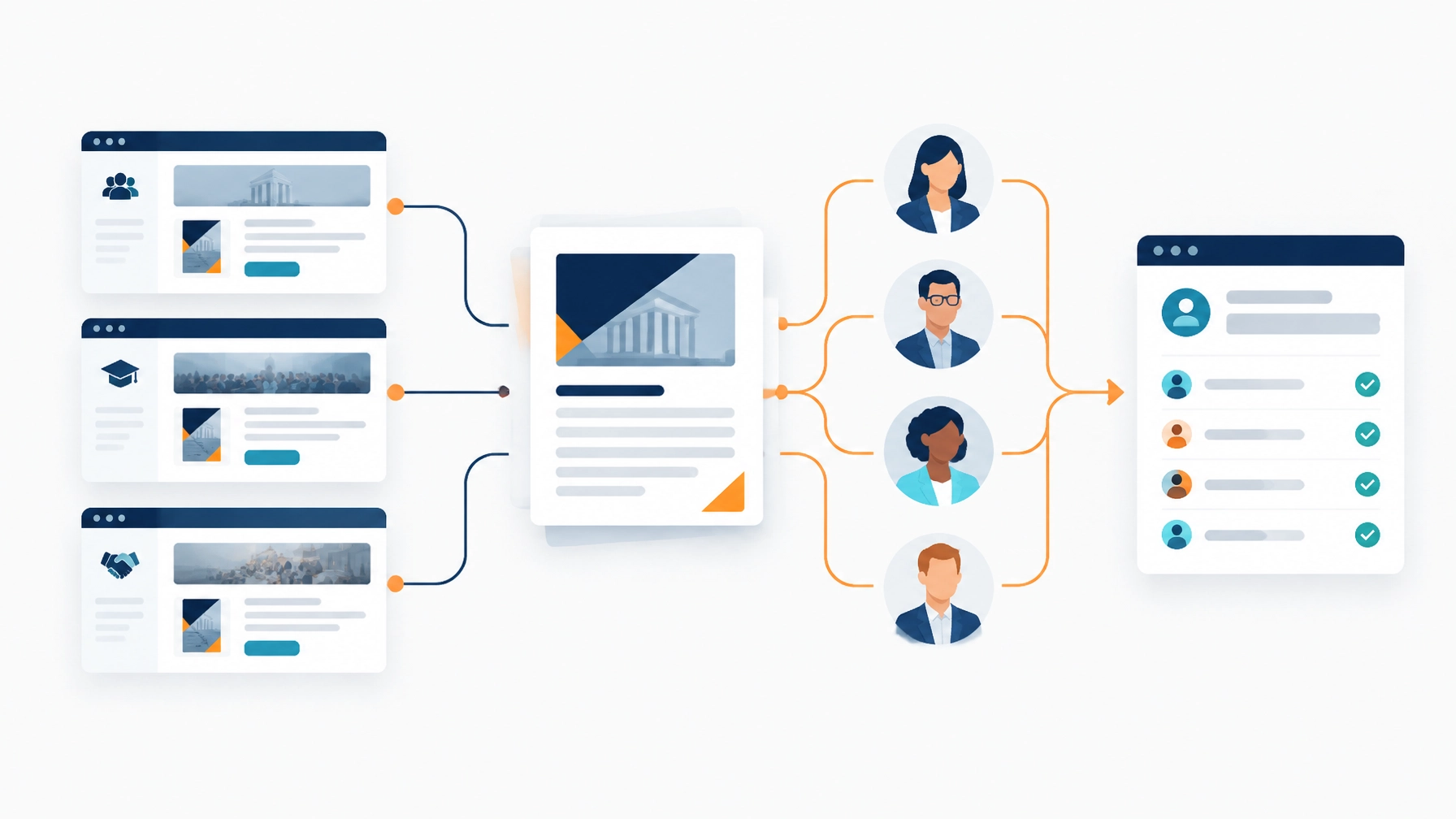
Content syndication distributes your educational content through channels beyond your own website and email list, so professionals who don’t know your company can discover it and request it. For B2B marketers, those requests become leads that meet agreed campaign criteria. Lead Marvels runs lead-generation syndication through association-based resource libraries used by professional audiences.
What is content syndication?
Content syndication has two common meanings in B2B marketing. One is republishing articles on other websites to widen readership. The other, the one this post covers, is distributing gated educational resources in channels where professionals request them, which turns each request into a lead-generation opportunity.
The mechanics are simple. You publish a white paper, guide, research report, or case study. A syndication partner places it in front of a relevant professional audience. A professional who wants it submits a request form. When the request matches the criteria agreed for your campaign, it becomes a lead your team can act on.
Here is what that looks like in practice. A risk-management software company publishes a white paper on its own site and promotes it to its email list of existing contacts. The same white paper, placed in a professional association’s resource library, reaches a compliance director who has never visited the company’s website. That second reader is the entire point of B2B content syndication: thought leadership distribution to people your owned channels do not touch.
For marketers planning this kind of program, content syndication campaigns are built around a specific resource, a defined audience, and a set of lead criteria agreed before launch.
How is it different from publishing on your own site?
Your website and email list reach people who already know you: subscribers, past attendees, and visitors who found you through search. Publishing there gives you full control over the experience, but it does not introduce your expertise to professionals outside that circle.
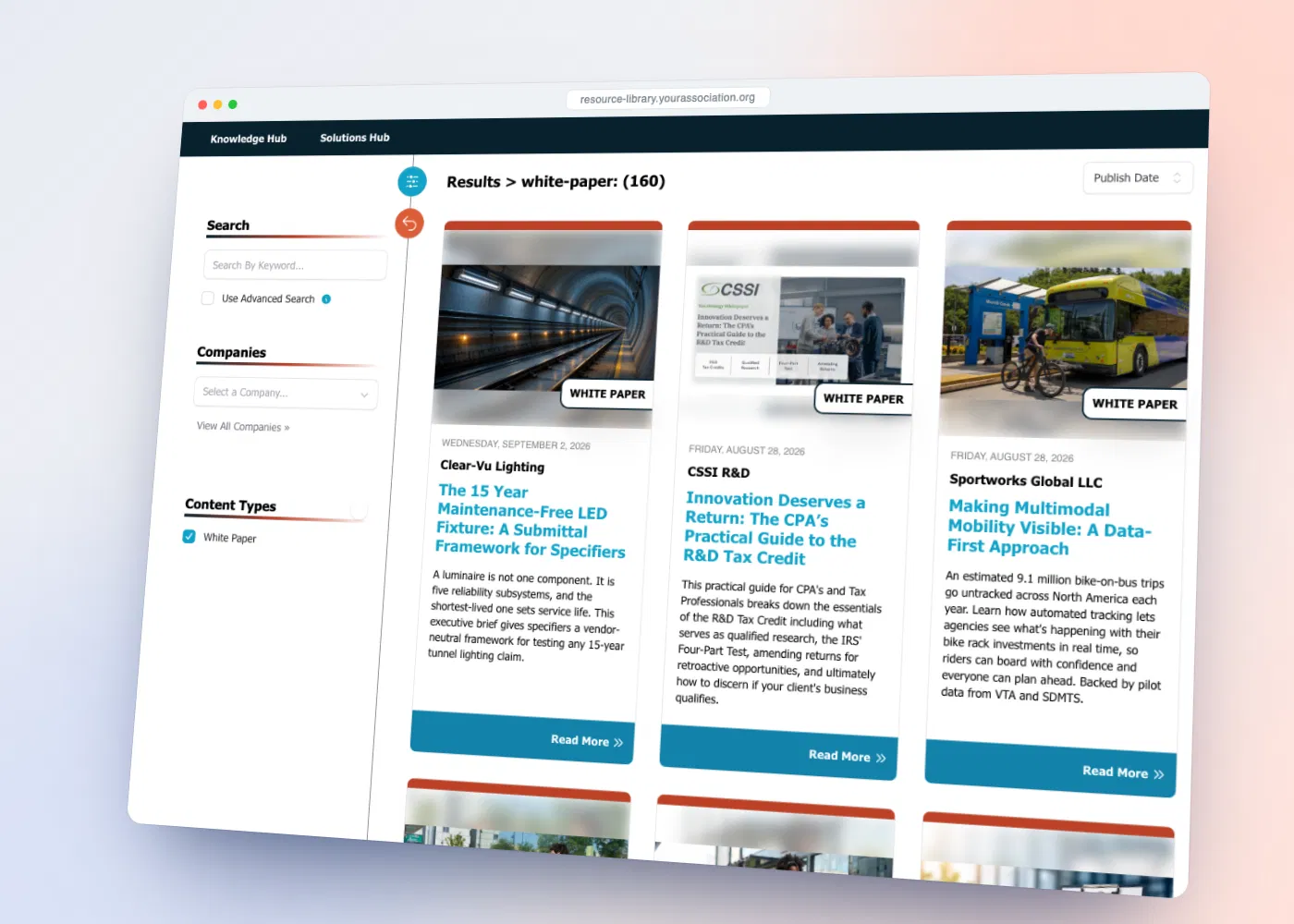
Syndication works in the opposite direction. Your content appears inside environments where professionals already spend time, so discovery happens before any relationship with your brand exists. The reader judges the resource on its usefulness, not on your company’s reputation.
A scenario shows the difference. An HR services firm writes a guide on reducing employee turnover. On the firm’s own site, downloads come from prospects already in its pipeline. In an association resource library, the same guide is requested by an HR manager at a company the firm has never contacted. The request is the first touch, and it arrives with context: which resource the person wanted and which professional community they belong to.
Both channels still matter. Owned publishing builds depth with people who know you; syndication builds breadth with people who don’t.
Which content formats work best for syndication?
Common B2B content syndication formats include white papers, guides, research, and case studies. Each earns attention in its own way:
- White papers explore a business or technical issue in depth, such as a regulatory change and what it means for operations.
- Guides walk a reader through a process or decision step by step, which fits practitioners solving a specific problem.
- Research gives readers original findings to act on, and it carries an authority that general advice does not.
- Case studies show how a real organization handled a challenge, so readers can picture the same outcome in their own situation.
Match the format to the reader’s moment. A CFO weighing whether to overhaul a process wants research or a case study; a practitioner implementing one wants a guide.

One test before you syndicate anything: a professional who has never heard of your company should be able to tell from the title and summary alone what they will learn and why the topic matters to their work. If a resource only makes sense to people who already use your product, rewrite the framing for a cold audience.
Why does matching the resource to the audience matter?
A common objection to syndication is that the leads arrive unqualified: people download content for many reasons, and some have no connection to what you sell. The concern is fair when a resource goes out to a general audience. A white paper on cloud security dropped in front of a mixed readership draws requests from readers outside the market for enterprise software.
Association resource libraries change that equation. The audience is already organized around a profession, so the people browsing are practitioners in that field. Requesting a resource is a deliberate act: the professional chose that topic, in a setting their profession trusts, and shared their information to get it. A request from that context carries more signal than an anonymous download.
That is why audience matching is the core planning decision in content syndication. The Lead Marvels network includes more than 100 association partners and reaches more than 5,000,000 professionals across 13 industries, from accounting and banking to legal, life sciences, and transportation. A campaign targets the part of that network relevant to what you sell, so a tax-technology vendor addresses accounting professionals rather than a mixed general audience.
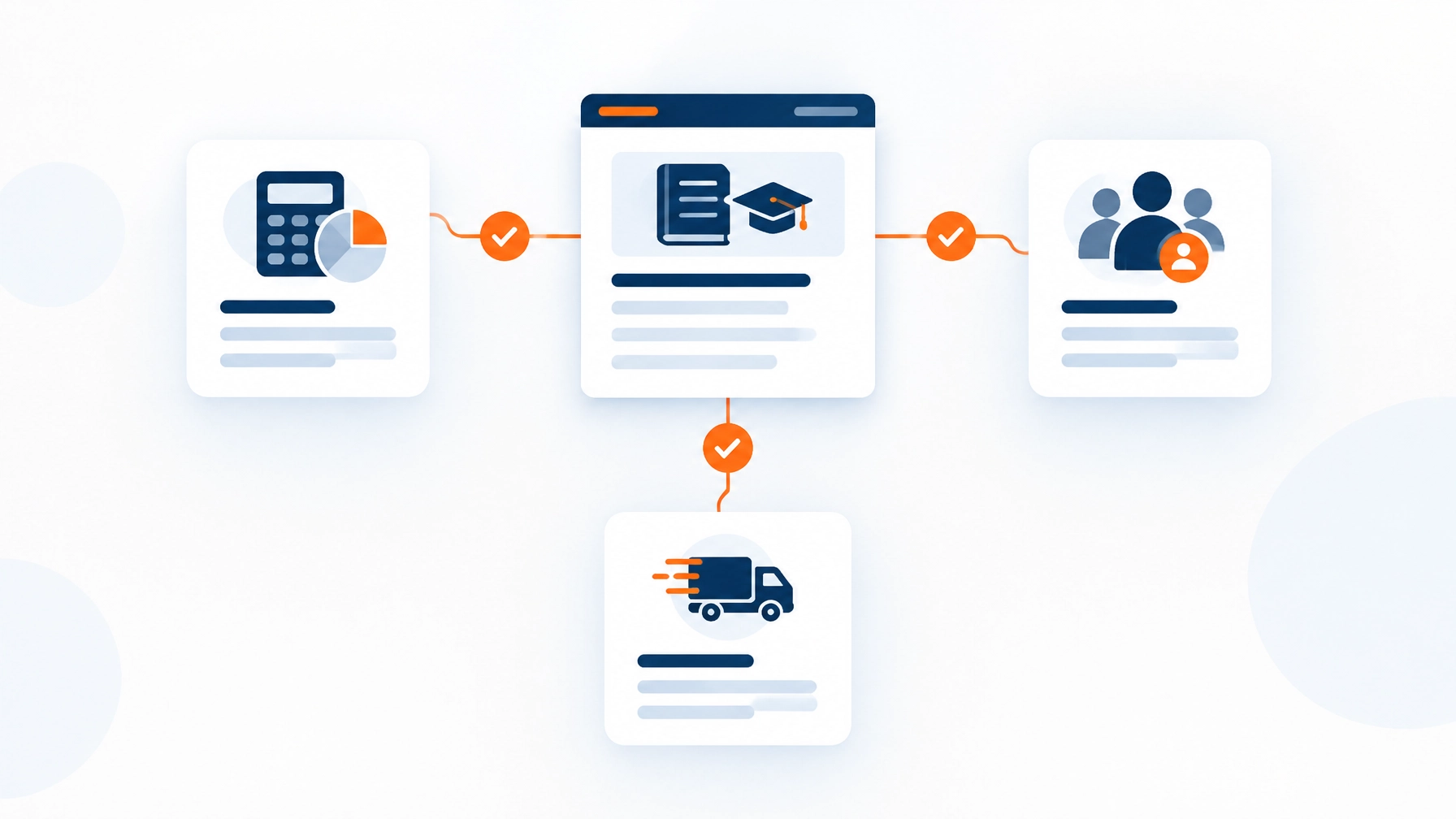
The match works in both directions: the audience should need what your resource teaches, and your resource should address something the audience works on. Picture a payroll provider whose overtime-compliance white paper is aimed at HR professionals. Placed in front of that audience, the paper addresses a topic HR teams work on, and the provider’s sales team gets requests from the right professionals. The same paper placed in front of a mixed business readership draws requests from people curious about overtime but not a fit for what the provider sells. You can review the advertiser campaign options to see how audiences and formats combine.
What should happen after someone requests your content?
Treat the request as the start of a relevant exchange. The professional asked for a specific resource on a specific topic, so the follow-up should stay on that topic.
A workable sequence:
- Deliver the resource immediately. A fast, friction-free handoff shows the request works the way the library promised.
- Follow with related value. A second resource on the same theme, a short summary of the resource’s findings, or a practical checklist extends the conversation without asking for anything.
- Connect where interest continues. If the person keeps engaging, a conversation about the topic they chose becomes the appropriate next step.
One expectation to set internally: a request shows interest in the content, not buying readiness.
Segment your team’s follow-up by topic. Requesters of a compliance guide hear next about a companion compliance resource, and requesters of a workflow case study get an implementation-focused summary. Each group hears about the topic it asked for, and the advertiser dashboard gives your team campaign, lead, and analytics information, so each follow-up rests on what the requester chose instead of guesswork.
Skip the generic pitch. A follow-up that ignores which resource the person requested erases the signal that made the lead worth generating.
Frequently asked questions
Is lead-generation syndication the same as republishing articles on other sites?
No. Republishing aims for readership, and lead-generation syndication distributes a gated resource to capture each request as a lead against defined criteria. Choose by goal: republish to reach readers, syndicate to generate requests your sales team can work.
How is lead-generation syndication different from buying a contact list?
A purchased list gives you contact details for people who did not ask to hear from you. Syndication inverts that: the professional finds your resource and requests it, so the first contact begins with their action rather than your outreach.
Does the content need to be gated?
For lead generation, yes. A gated resource captures a request and identifies the professional; an ungated version builds readership but records no one to follow up with. A workable split is a gated core resource with ungated companion pieces that extend its topic.
How long should I wait before judging a campaign?
Long enough to see a pattern across requests rather than a first-day spike. Early requests show the mechanics work; the pattern over the following weeks tells you whether the audience and the resource are matched. Judge against the lead criteria agreed before launch, not against a single day’s volume.
When you’re ready to reach professionals who don’t know your company yet, request a campaign.